
Spacescaping
2025
A spatial systems framework for understanding, shaping, and navigating personal and collective worlds.
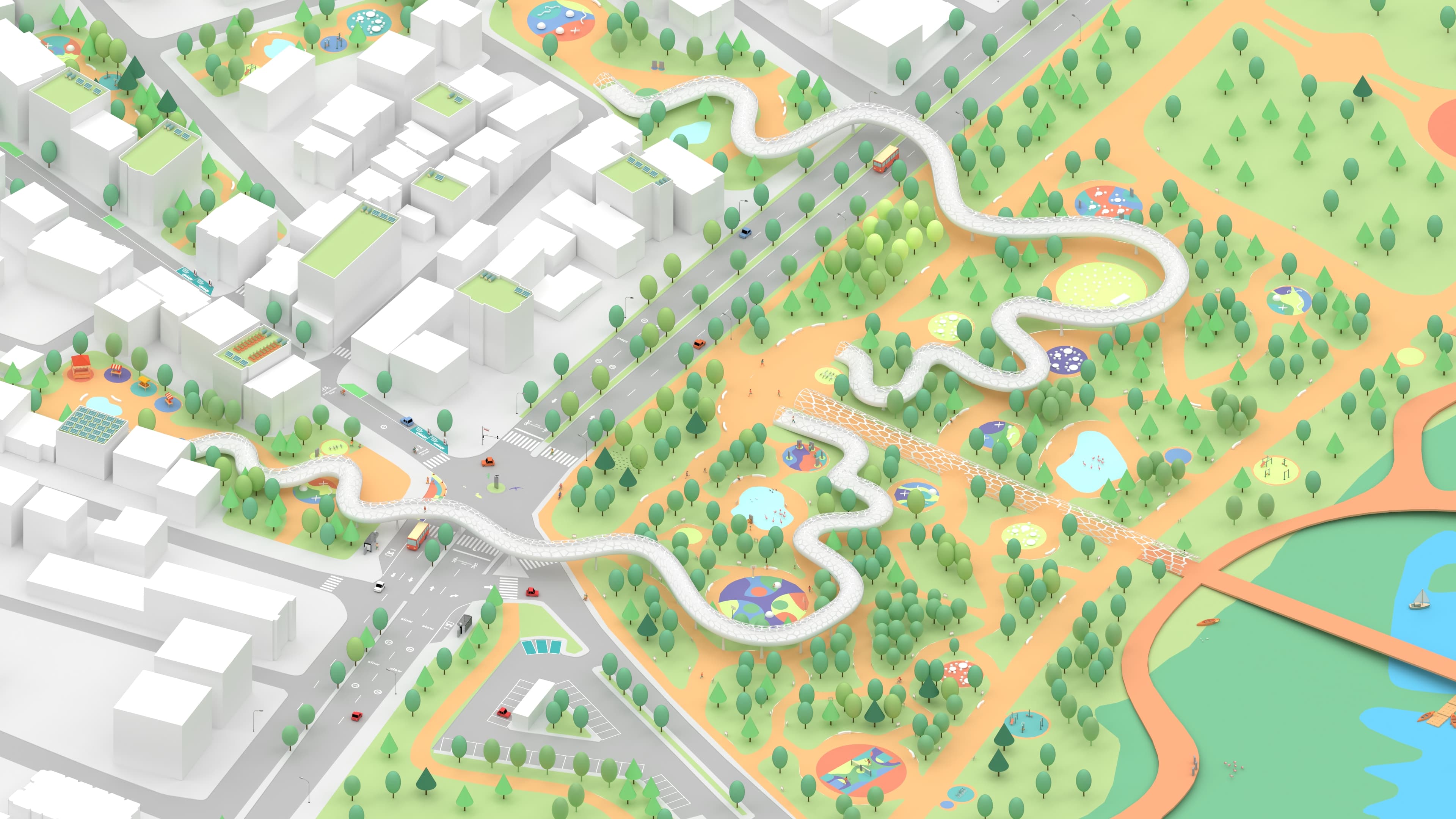
Spacescaping is a design framework that sees space as more than a physical environment. It connects memory, story, tools, people, nature, and technology into one living system. The idea began from a simple belief: we do not only design spaces, spaces also shape how we think, feel, move, and belong. Developed through the Nova Urba project, recognized as an Ove Arup Foundation Outstanding Project for Youth Vision for Green and Thriving Neighbourhoods, Spacescaping explores how ideal, digital, and physical spaces can co-evolve through interaction. It offers a more human and systems-oriented direction for regenerative urban design, where citizens are not passive users, but active participants in shaping their environments.
Humanity thrived through a Cognitive Revolution shaped by mythos (storytelling), logos (order) and techne (tools). The first collective systems were carved into monoliths—holders of memory and identity, seeds of cities. With the rise of digital spaces, memory became global, and today’s challenges call us to act together.
From this insight emerges Spacescaping: a regenerative model where ideal, digital and physical spaces co-evolve through interaction. Rooted in the cognitive cycle, making design processes sensory. At its heart are Dialiths—monoliths transformed into dialogue with nature, urban kiosks that spark transformation and introduce spacescaping.
Transformation starts through tactical urbanism; Dialiths, pop-up parks, micromobility hubs and art installations, initiating rapid neighborhood change and raising awareness. Beyond kiosks, every digital screen becomes part of spacescaping, which unfolds in three cognitive phases:
1. Co-Governance (logos & perception, awareness): Shared stewardship replaces top-down governance. Stewards monitor policies, budgets, services, projects and analysis through blockchain-secured, AI-assisted 15-minute maps and digital twins, fostering complete neighborhoods.
2. Co-Reflection (mythos & learning, understanding): Residents propose, vote, participate and invest in initiatives fostering human–nature well-being, cultural identity, education and green jobs, alongside idea boxes and events fostering inclusive communities.
3. Co-Creation (techne & meaning-making, action): Modular elements and circular resources regenerate underused areas into multifunctional hubs, urban agriculture, community gardens, renewable energy, adaptive reuse—building people-centered public spaces while enhancing urban nature.
Through this loop, neighborhoods connect, compete to improve, and share—reducing emissions, improving health, cleaning air, making citizens active, ensuring equitable access to services and stronger social cohesion scaling across the city


.png&w=1920&q=75)

